
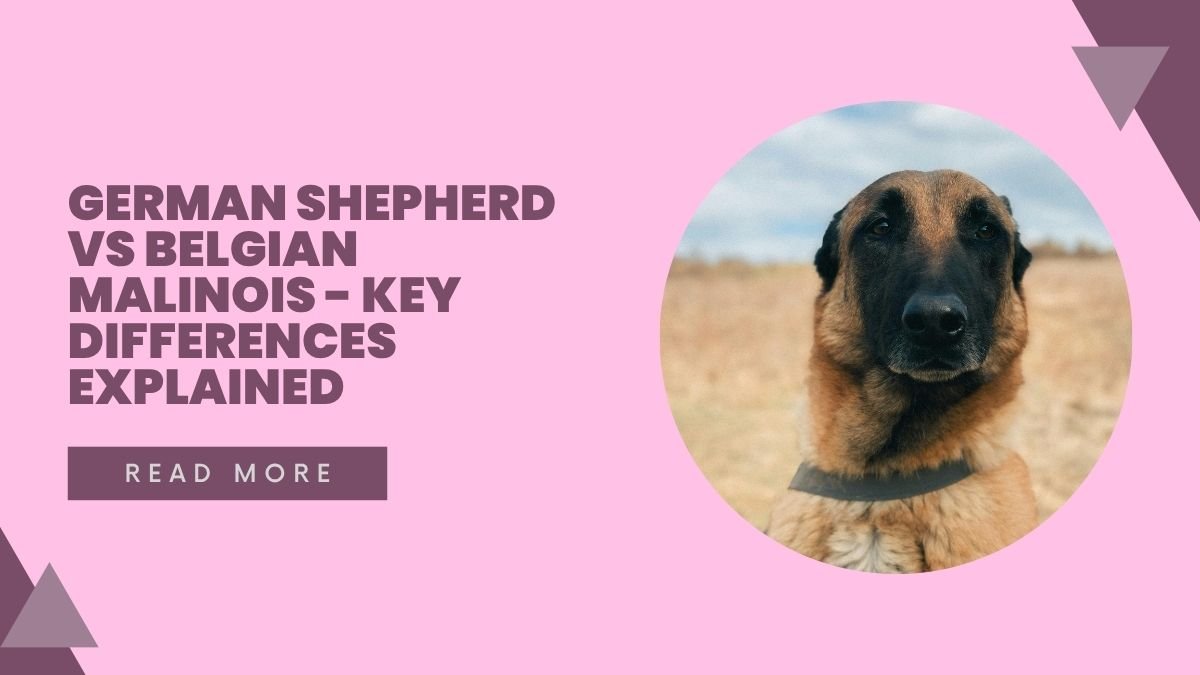
A German shepherd and a Belgian Malinois are the most desired service dogs due to their adaptability, intelligence, work ethic and ability to connect with humans. They do well in various professions such as assisting the deaf in carrying out their day-to-day activities as well as detecting drugs in airports and many other individuals have them as pets.
They are intelligent, high-drive canines and are extremely loyal to their families and they have to be trained involving obedience exercises and frequent positive reinforcements in order to maintain a well-balanced and calm down state. When unattended over a long time, they may be destructive and would channel their energies in chewing or barking.
A responsible breeding and health testing is crucial to survival of these working breeds. Appreciable breeders and various organisations such as the German shepherd dog council are the ones that recommend healthiness of these dogs.
These pups can have a long and happy life when they are well taken care of and fed a healthy diet. German Shepherd requires activities to be involved in during the day in terms of exercise. This may involve smell walking, running together at the park or dog activities in agility or tracking.
Protecting the size and physical appearance.
The German Shepherds are muscular with a good balanced look and build. The breed standard states that they appear massive, not skinny, give an impression of physical fitness and dynamism, and the smooth development of the forequartered and hindquartered parts.
This kind of temperament and vigilance is what contributes to them being great service dogs in law enforcement, search and rescue operations, military police use and as tracking K-9s. They are also trained companions that are suitable to work with experienced owners due to both their cleverness and motivation.
Although the German Shepherd is usually open to other pets and family members (especially children), given their body size and strength, they could be unapproachable or rather protective of strangers. This can be overcome through early/ consistent socialization.
It is worth mentioning that traits of personality may be genetic, i.e. in case your German shepherd is a child of aggressive or highly strung parents, the dog stands higher chances of being the same as an adult. This risk can be reduced through complying with breed standards and placing more emphasis on the health testing. This is how we encourage potential owners to ensure that they meet both parents of a German Shepherd puppy, and check them thoroughly.
Temperament and Personality
Because of their work hard nature, Malinois need high amounts of exercise and activities to engage their minds. They establish an indestructible connection to their humans, and desire nothing but to spend as much time as possible with you.
They are trained to work in jobs that require instant-reactiveness: pursuing suspects, detecting bombs and narcotics, trailing K-9 police officers. Having this hair-trigger responsiveness is an asset in the field of professional training, which may turn to be a burden in the house hold scenario.
Malinois devoid of impulse control are annoying (fortunate enough not to like the couch, pulls too hard at the doorbell, or transforms into a ship of Theseus in a flash) and unsafe.
This behavior can be prevented by means of training everyday. Regular obedience classes help you to teach your dog to work out their energy and concentration in activities instead of letting the instinct to run or initiate and organized activities like agility, scent walks and protection training can work to help them learn to control their arousal at exciting situations.
Besides regular obedience and daily exercise, have your Malinois year-round heartworm, flea and tick medication to prevent the skin, coat and lungs of your Malinois being infected.
Energy and Exercise Needs
Belgian Malinois are dogs which succeed in demanding physical and intellectual activity. They need a good and assertive bearer, yet are also adherents to early socialization and positive reinforcement training. They are very trainable and do not adapt very well to various living conditions.
Their commanding presence qualifies them excellently into doing security work and other law enforcement employment.
They learn new commands very fast, yet they are highly energetic hence first time dog owners would have a lot of trouble keeping them in check. They should have regular positive reinforcement based training sessions to ensure that they do not become bored or stressed.
GSDs are smart and herding dogs that have an instinct to defend their flock. They like best to be busy with their people, and tend to get agitated or high strung, unless they are stimulated both mentally and physically.
They are not the safest bet among families with small children because their instincts of predation may cause them to pursue and flock their children. They are likely to have hip and elbow dysplasia as well as getting cataract later in life. They have an average life of 14-16 years.
Training and Intelligence
German shepherds are smart dogs; they react swiftly and readily to training. They are very obedient and able to make good guard dogs of their owners.
These dogs are faithful to their families and they regard them as their party, and will do everything to protect them. They possess a good prey instinct and lots of energy hence they require lots of exercise in order to use their energy up in a constructive way.
They are friendly all around like the German shepherd, particularly when socialized and trained early, when it comes to kids. Nevertheless, it may happen that they are not so tolerant towards rough play when they are males.
In the instance that you are considering adopting a German Shepherd, be sure to contact a rescue or one of the shelters that can provide you with the information about the personality of the dog, its energy level and training requirements.
Both the German shepherd and the Belgian Malinois are top of the line guard dogs, and are therefore best suited to professional dog owners willing to dedicate time and effort to train their dog. In case you are planning to have one of these breeds as part of your family, make an appointment with a Greencross Vets close-by to get information about their temperament and lifestyles needs.
Compatibility of the Family and Child.
Both German Shepherds and Belgian Malinois are great in the role of family dogs, and they bond well with their owners and will do anything to protect them. Ample socialization early on such as exposure to children and other animals in their positive environment makes them understand and have confidence in children.
Through appropriate and well established boundaries based on proper training between children and dogs; there is a balanced relationship between the two which is fun. Oversight of plays with toys reduce the risk of accidental nipping and enable safe games.
These breeds are very strong guardians due to their strong protection instincts, level of intelligence, and their working ethic. But they need a lot of training in order to direct these instincts safely and fruitfully. They should also have an activity and exercise regularly to keep their energy levels within their control and avoid the destructive behaviors.
Unattended over extended periods of time, these dogs might become inventive in occupying their time, e.g. by barking at anyone who comes to the house or by chewing furniture. Getting the family and making them go out with the dog on daily walks and have training exercises make them feel satisfied and joyous.
Grooming and Shedding
These breeds are both high-energy and in need of regular exercise, mental stimulation (so that they cannot be destructive) and grooming. They also drop their feathers seasonally and thus necessitate additional care in terms of brushing and untangling. Both can be trained easily and are successful in a wide array of tasks such as law enforcement, military, search engine and rescue, as well as personal protection.
German shepherds are great guard dogs because they are obedient by nature, possess an instinct to guard their owners and can differentiate between danger and non danger. They are also highly trainable and are very intelligent which makes them well fitted to be used in personal protection work.
Healthy lifestyle contributes to the quality of life and life of a German Shepherd. Good breeding and dietary practices lead to a healthy heritage, whereas its weight-control will decrease the burden on arthroplastic joints which may cause shorter life expectancy.
Everyday activity keeps muscles short and the heart healthy and mental value development keeps the mind strong, thus avoiding age-related mental alterations in the elderly dog. All these precautionary measures can be used to minimize any preventable dangers, and a German Shepherd will live long, healthy and productive life with their family!
Health and Lifespan
The well-being and life-span of Belgian Malinois, similar to any breed, is influenced by a plethora of factors, although the impact of genetics is the most significant. The screening of healthy parents gives the pupils of healthy parents an advantage on their first steps on earth.
Good nutrition, daily physical activity to work off their high energy and trips to the vet at least once a year assists in maintaining these dogs at their best weight and on the path to living their best lives.
Being herding dogs, Belgian Malinois have a high prey drive and natural curiosity that could result in exploring vehicles or children and thus start socialization early.
They adore everyday hard intensive physical exercises and daily enrichment activities aimed at mastering skills and purpose, thus, they require regular training and have a devoted handler to their further progress.
When well taken care of, the Belgian Malinois has the potential to live to 12-14 years, one of the longest working-class large dog breeds.
Blastomycosis is a common health problem, as well as bloat (gastric dilatation and volvulus, or GDV), hip and elbow dysplasia, thyroid (hypothyroidism) and PRA (progressive retinal atrophy) problems. The ones you have can be managed through proper diet, exercise and through veterinary care.