
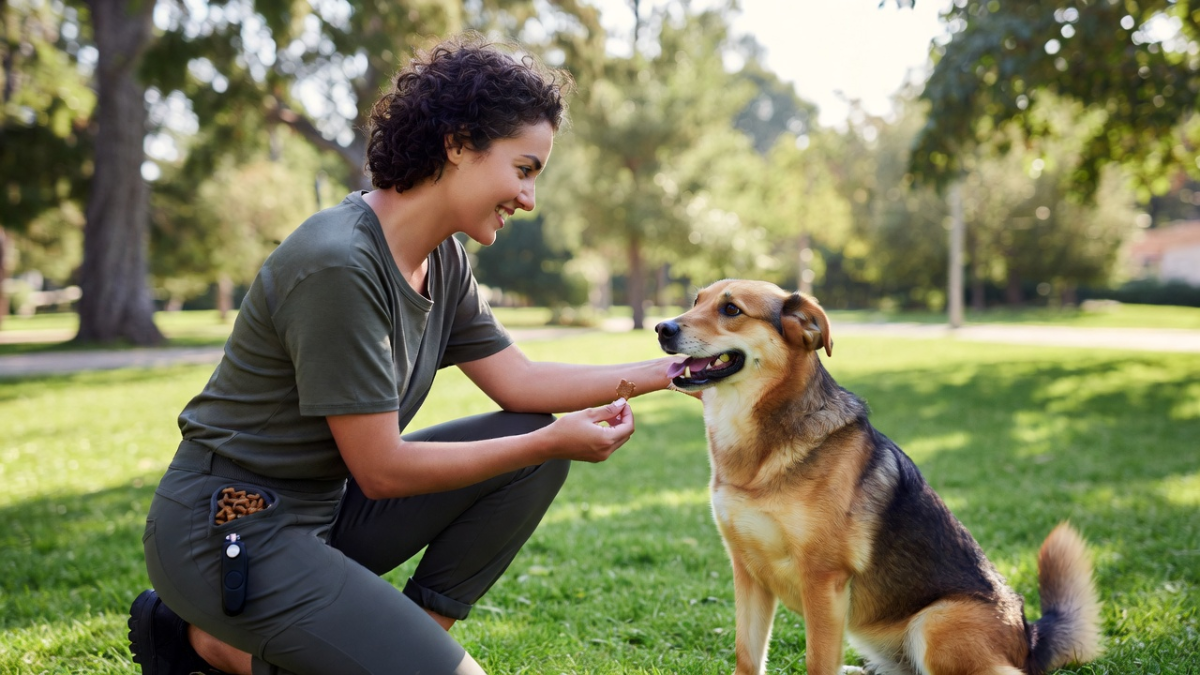
Training your dog with positive reinforcement is one of the most effective, humane, and science-backed methods used by professional trainers worldwide.
This approach focuses on rewarding good behavior instead of punishing mistakes, helping dogs learn faster while building trust and confidence.
What Is Positive Reinforcement Dog Training?
Positive reinforcement training means rewarding your dog immediately after they perform a desired behavior. Rewards can include treats, verbal praise, toys, or playtime.
Studies in animal behavior show that dogs trained with rewards learn commands up to 40% faster and show lower stress levels compared to punishment-based methods. This method works for puppies, adult dogs, and senior dogs across all breeds.
Most Effective Positive Reinforcement Methods
| Training Method | How It Works | Key Benefits |
|---|---|---|
| Food Rewards | Small, high-value treats after correct behavior | Fast learning and high motivation |
| Verbal Praise | Happy tone and encouraging words | Builds emotional connection |
| Play & Toys | Tug, fetch, or favorite toys as rewards | Ideal for energetic dogs |
| Clicker Training | Sound marks correct behavior before reward | Improves timing and clarity |
Best Practices for Successful Training
- Perfect Timing: Reward within 1–2 seconds so your dog clearly understands which behavior is correct.
- Consistency Matters: Use the same commands, rewards, and rules daily.
- Short Sessions: Keep sessions between 5–10 minutes to maintain focus.
- Gradual Reward Reduction: As behavior improves, replace treats with praise or play.
- No Punishment: Harsh corrections can cause fear, anxiety, and aggression.
Why Positive Reinforcement Works Better
Dogs trained with reward-based training show higher obedience retention, better social behavior, and stronger trust toward their owners. Surveys indicate that over 85% of modern dog trainers prefer positive reinforcement due to its long-term effectiveness and ethical benefits.
Positive reinforcement dog training creates a happy learning environment where dogs feel safe, motivated, and eager to please.
By focusing on rewards instead of punishment, owners can achieve faster results, stronger bonds, and better-behaved dogs. This method is not only effective but also supports your dog’s mental and emotional wellbeing.
FAQs
How long does positive reinforcement take to show results?
Most dogs start responding within a few days, with consistent improvement over weeks.
Can I train stubborn dogs using positive reinforcement?
Yes, stubborn dogs often respond better because rewards increase motivation.
Are treats the only reward option?
No. Praise, toys, and playtime are equally effective when used correctly.