
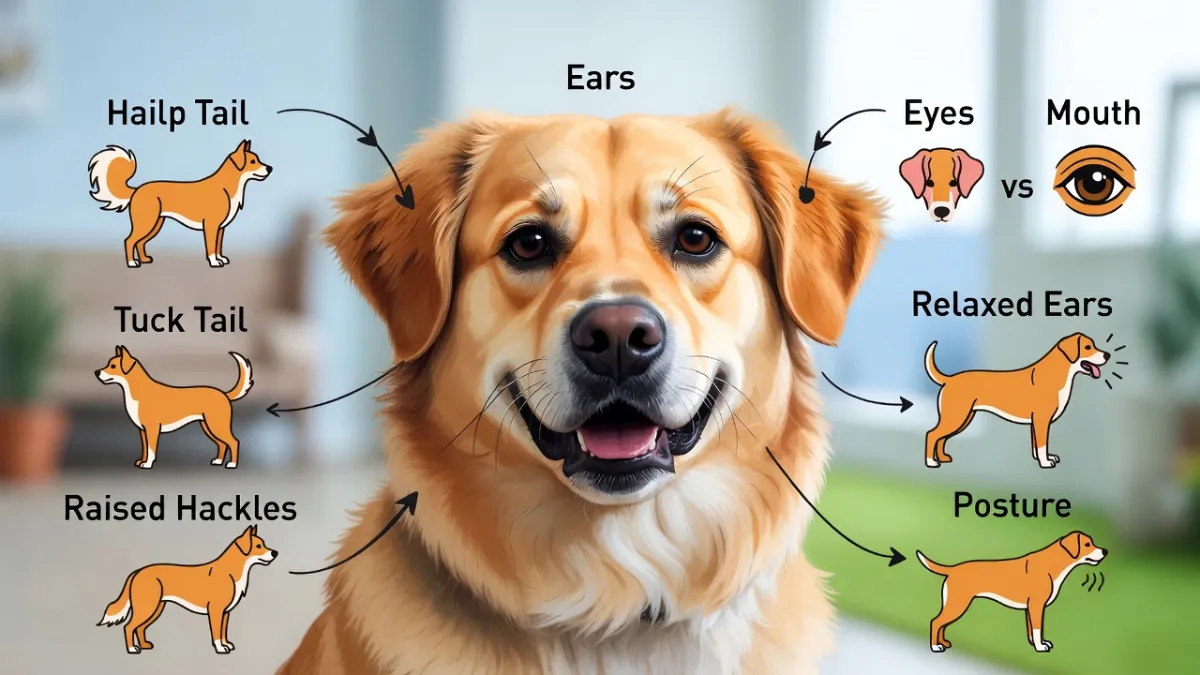
Understanding dog behavior is key to building a strong, trusting relationship with your pet. Dogs do not communicate with words; instead, they use body language, facial expressions, vocal sounds, and behavior patterns.
Studies in canine cognition show that dogs can recognize 150–250 human words and gestures, depending on breed, training, and environment. Interpreting these signals correctly helps prevent fear, aggression, and behavioral problems.
How Dogs Communicate Their Emotions
Dogs express emotions primarily through posture, tail movement, ear position, eye contact, and movement patterns. A relaxed dog typically has a loose body, soft eyes, and neutral tail movement.
In contrast, stress or fear is often shown through lip licking, excessive yawning, pacing, or tail tucking. Recognizing these early signs allows owners to respond before behavior escalates.
Common Dog Behavior Signals Explained
| Dog Signal | Meaning | What Owners Should Do |
|---|---|---|
| Relaxed tail wag | Happiness and comfort | Engage calmly |
| Stiff, high tail | Alert or dominance | Observe surroundings |
| Tucked tail | Fear or insecurity | Offer reassurance |
| Play bow | Invitation to play | Join playtime |
| Growling | Warning or discomfort | Give space |
| Excessive barking | Stress, boredom, or alert | Identify trigger |
| Raised hackles | High arousal or fear | Avoid confrontation |
Why Context Matters in Dog Behavior
No single signal should be judged alone. For example, tail wagging can indicate happiness or tension depending on stiffness and speed. Understanding the full body posture ensures accurate interpretation and safer interactions.
Your dog communicates constantly through subtle and obvious signals. Learning to read dog body language and behavior cues improves training success, reduces stress, and strengthens emotional bonding. With observation, patience, and consistency, you can truly understand what your dog is trying to tell you.
FAQs
Does tail wagging always mean a dog is happy?
No. Tail wagging can signal excitement, nervousness, or alertness depending on movement and posture.
How can I tell if my dog is stressed?
Common signs include yawning, lip licking, pacing, avoidance, and lowered body posture.
Can dogs understand human emotions?
Yes. Dogs can sense tone, facial expressions, and emotional changes, often responding accordingly.