
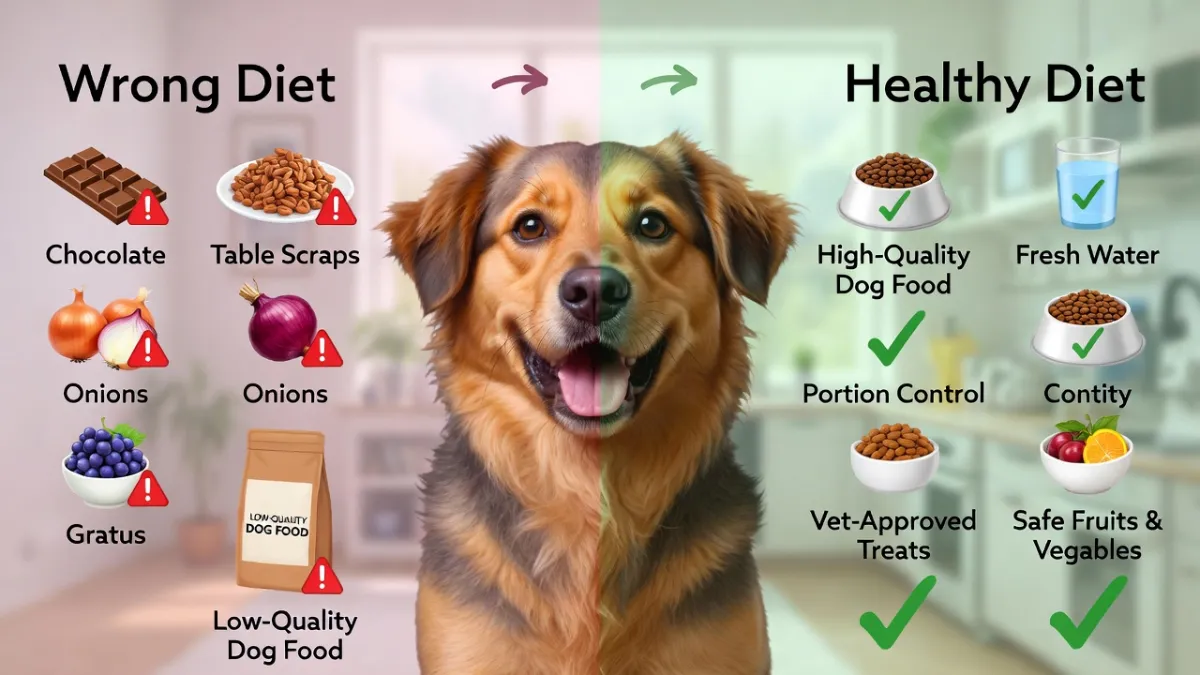
Feeding your dog the right way is essential for long-term health, yet many pet owners unknowingly make dog nutrition mistakes that lead to obesity, digestive problems, allergies, and weak immunity.
Veterinary trends show a steady rise in overweight dogs due to overfeeding, poor food choices, and lack of portion control. Understanding these mistakes and correcting them can significantly improve your dog’s quality of life.
Most Common Dog Nutrition Mistakes and Solutions
| Mistake | Health Impact | How to Avoid It |
|---|---|---|
| Overfeeding | Obesity, diabetes, joint stress | Follow portion guidelines based on size and activity |
| Too Many Treats | Excess calorie intake | Keep treats below 10% of daily calories |
| Wrong Life-Stage Diet | Nutrient imbalance | Use puppy, adult, or senior-specific food |
| Low-Quality Dog Food | Poor digestion, weak immunity | Choose complete and balanced diets |
| Feeding Human Food | Toxicity, digestive upset | Avoid table scraps and unsafe foods |
| Sudden Food Changes | Vomiting, diarrhea | Transition food over 7–10 days |
| Ignoring Hydration | Kidney and digestion issues | Provide fresh water at all times |
Detailed Explanation of Key Mistakes
Overfeeding and Free-Feeding: Leaving food available all day encourages overeating. Measured meals help maintain a healthy weight and energy level.
Ignoring Life-Stage Needs: Puppies need higher protein and calories, while senior dogs require lower calories and joint support. Feeding the wrong formula can cause deficiencies or excesses.
Treat Overuse: Treats should reward behavior, not replace meals. Excess treats are a major cause of weight gain.
Poor Food Quality: Cheap foods may lack essential nutrients. A balanced dog diet supports digestion, coat health, bones, and immunity.
Avoiding common dog nutrition mistakes is one of the most effective ways to ensure a long, active, and healthy life for your dog.
Focus on portion control, high-quality food, limited treats, proper hydration, and age-appropriate diets. Consistent, informed feeding habits make a powerful difference in your dog’s overall wellbeing.
FAQs
How often should I feed my dog?
Most adult dogs thrive on two meals per day, while puppies may need three to four smaller meals.
Are grain-free diets always better?
Not necessarily. Dogs need balanced nutrition, and grain-free diets are only necessary for specific allergies.
Can improper nutrition shorten a dog’s lifespan?
Yes. Long-term poor nutrition increases the risk of chronic diseases and reduces life expectancy.