
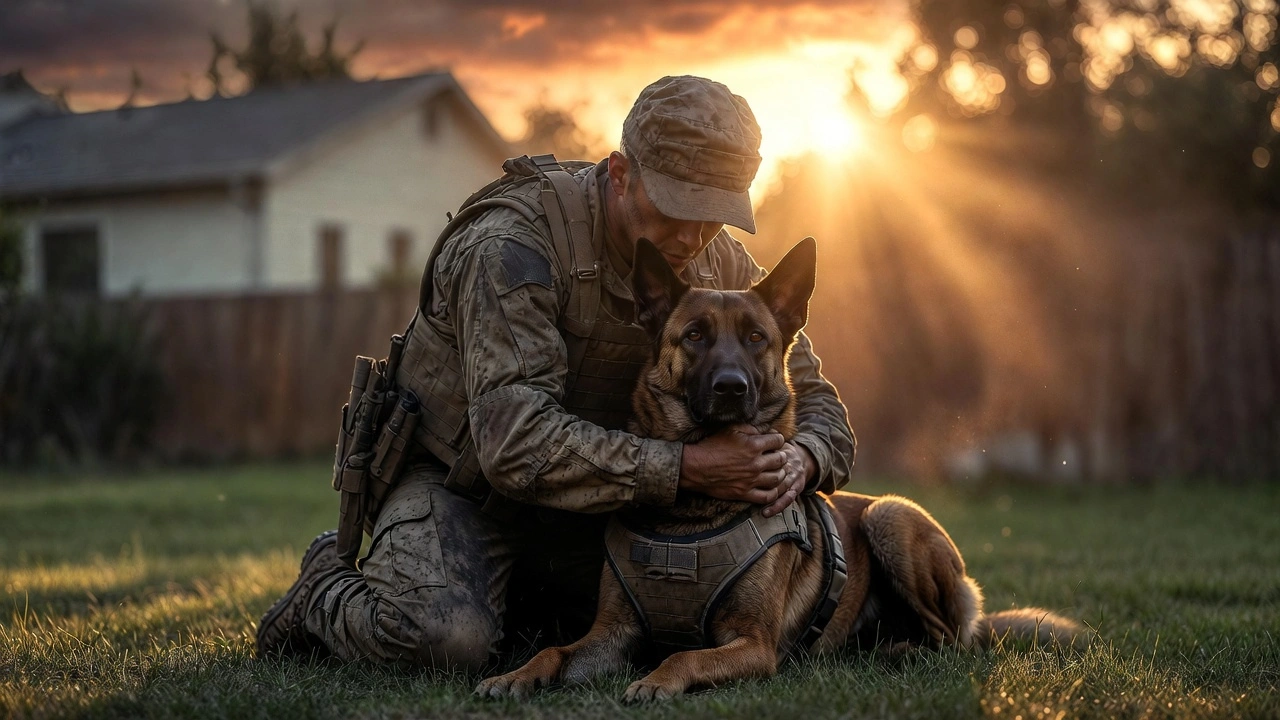
Imagine facing danger every day with only one partner you fully trust — a dog trained to detect explosives and protect lives. Now imagine being told that partner must retire early due to injury, and you may never see him again.
That was the heartbreaking reality for a military dog handler who refused to let his loyal Belgian Malinois military dog disappear into the system. Instead of saying goodbye, he chose something powerful — adoption, loyalty, and lifelong care.
This inspiring story shows the deep bond between a military working dog and handler, and why retirement does not mean the end of their partnership.
A Slovakian-Born Dog Who Became An Australian Hero
Most Australian Defence Force military dogs are bred and trained locally. But Drak, a highly driven Belgian Malinois, was different. He was born in Slovakia and later selected for his strong temperament and working ability.
In 2019, Drak was transported across the world to join the Australian Defence Force. From his first training sessions, it was clear that he was not an ordinary dog.
He showed:
- Strong focus
- High energy
- Sharp detection instincts
- A constant desire to work
Within weeks, he adjusted to Australia’s tough desert conditions. Soon, he was assigned to patrol and explosive detection duties, helping secure airfields and protect military units in high-risk zones.
Drak quickly earned trust because of his calm performance under pressure.
The Perfect Pair: Calm Handler Meets High-Energy Malinois
In the same year Drak joined the force, he was paired with Leading Aircraftman James Reid, an experienced military dog handler known for his steady and calm personality.
Their personalities were very different.
| Trait | James Reid | Drak |
|---|---|---|
| Personality | Calm, patient, controlled | Energetic, intense, alert |
| Strength | Clear communication | Strong drive and focus |
| Working Style | Methodical | Fast and instinctive |
| Emotional Balance | Steady | High-alert |
Instead of clashing, they balanced each other perfectly.
Reid’s calm nature helped Drak stay focused. Drak’s high energy kept Reid sharp during missions. Over time, Reid learned to read even the smallest signals from Drak — a stiff tail, a pause in breathing, or a slight glance backward.
This level of understanding is what makes a military dog and handler bond so powerful.
Lessons They Learned From Each Other
Reid often said Drak was more than a working dog — he was a teacher.
Working with a high-drive Belgian Malinois service dog taught him:
Patience
High-energy dogs need repetition, not frustration.
Self-Control
A handler must stay calm even when the dog reacts to loud sounds or distractions.
Clear Communication
Consistent commands help build trust and confidence.
With steady leadership, Drak became precise, confident, and reliable. Their unit often assigned them to sensitive tasks where mistakes were not allowed.
They were known as one of the most dependable teams.
Career Cut Short By Injury
Sadly, their journey changed suddenly.
During a training session, Drak suffered an injury that affected his ability to continue active duty safely. For a military working dog, even a moderate injury can end a career.
Veterinary staff evaluated him and decided returning to full operational work would be too risky.
Retirement was the safest option.
But retirement also meant something painful — separation.
Military dogs are not automatically adopted by their handlers. There are strict procedures and evaluations involved.
For Reid, the thought of losing Drak was heartbreaking.
The Adoption Process: Not As Simple As It Sounds
Instead of accepting separation, Reid applied to adopt Drak officially.
The military dog adoption process required several steps:
| Step | What It Involved |
|---|---|
| Medical Check | Full veterinary exam to confirm Drak could live safely as a pet |
| Behaviour Review | Assessment of reactions around children, strangers, and other animals |
| Security Clearance | Confirmation that the dog no longer held sensitive operational skills |
| Handler Evaluation | Proof that Reid had proper housing, time, and financial support |
After meeting all conditions, approval was granted.
Drak was no longer just a military asset.
He became family.
From Battlefield To Backyard Life
Retiring a Belgian Malinois from military service is not like adopting a typical pet.
These dogs are bred to work. They need mental stimulation and structure.
Reid carefully planned Drak’s transition:
- Short, light training sessions
- Sniffing games for mental exercise
- Controlled walks instead of intense running
- Puzzle feeders to keep his mind active
Because of his injury, high-impact exercise was limited. So physical work was replaced with brain challenges.
Retirement did not mean doing nothing.
It meant doing things differently — with less pressure.
Instead of scanning airfields, Drak now watches neighborhood life from a safe yard.
Why Many Handlers Choose To Adopt Their Military Dogs
The bond between a retired military dog and handler is not emotional drama — it is built through years of shared risk.
Many defense forces now encourage adoption by handlers because:
- The dog adapts faster to civilian life.
- The handler understands the dog’s triggers and strengths.
- Emotional recovery becomes easier for both.
For many veterans, caring for a retired working dog provides comfort and structure during post-deployment life.
What Makes A Belgian Malinois So Demanding?
The Belgian Malinois breed is popular in police and military forces worldwide because of its traits:
- Very high energy
- Strong intelligence
- Deep loyalty to one main person
- Sensitivity to body language
However, this breed is not suitable for every home.
Even after retirement, a Malinois needs:
- Daily mental activity
- Clear rules
- Regular vet care
- Structured routine
Handled properly, they become loyal and balanced companions.
Neglected, they may develop anxiety or behavioral issues.
Important Points If You Consider Adopting A Retired Working Dog
Civilians sometimes get the chance to adopt former police or military dogs.
Before adopting, be prepared for:
- Possible medical issues from past service
- Continued training needs
- Gradual introduction to family and pets
- Structured daily routine
On the positive side, these dogs are usually well-trained and deeply bonded to humans.
This story is not just about a dog retirement. It is about loyalty, responsibility, and honoring service. When Drak’s military career ended early due to injury, his handler could have walked away. Instead, he chose commitment over convenience.
The journey from battlefield missions to backyard peace shows how powerful the bond between a military working dog and handler truly is. Retirement did not break their partnership — it changed its form.
Drak no longer protects airfields, but he still protects something valuable: the connection built through trust and shared sacrifice.
In a world where service animals risk their lives silently, giving them a safe and loving retirement is the least they deserve.