
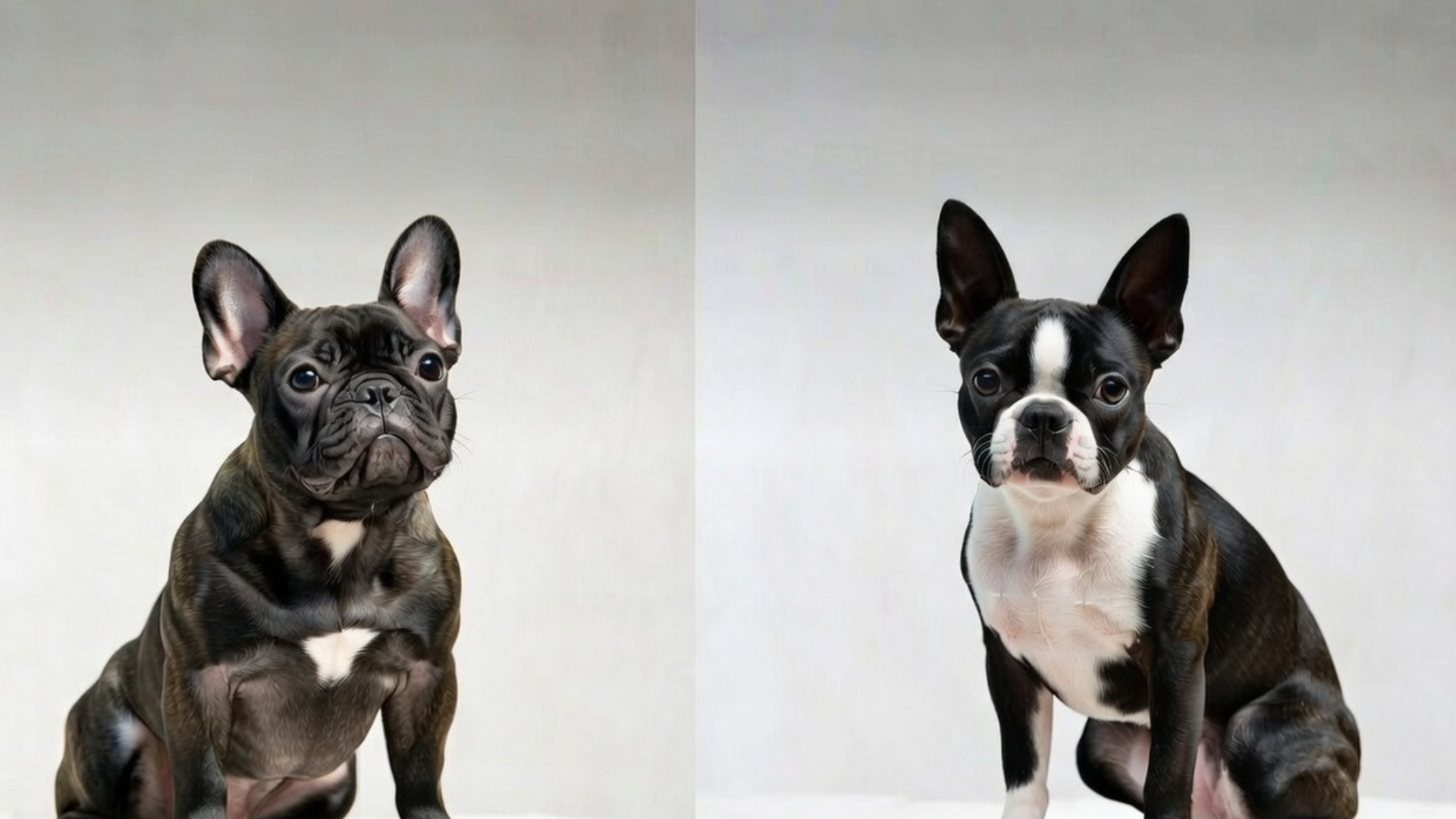
Many dog lovers often confuse French Bulldogs and Boston Terriers because both breeds have short snouts, compact bodies, and upright ears. However, these two small companion dogs differ in appearance, personality, activity level, and health concerns.
Understanding these differences can help potential owners choose the breed that best fits their lifestyle.
Overview of French Bulldogs and Boston Terriers
The French Bulldog originated from England and later became popular in France, where it gained its name. It is known for its muscular build, bat-like ears, and calm personality.
The Boston Terrier, developed in the United States in the late 1800s, is often called the “American Gentleman” because of its tuxedo-like coat pattern and polite demeanor.
Both breeds belong to the brachycephalic category, meaning they have flat faces and short noses, which can influence their breathing and exercise tolerance.
Key Differences Between French Bulldogs and Boston Terriers
| Feature | French Bulldog | Boston Terrier |
|---|---|---|
| Average Height | 11–13 inches | 15–17 inches |
| Average Weight | 20–28 lbs | 12–25 lbs |
| Lifespan | 10–12 years | 11–13 years |
| Body Type | Stocky and muscular | Lean and athletic |
| Ear Shape | Rounded “bat ears” | Pointed erect ears |
| Coat Colors | Fawn, cream, brindle, pied | Mostly black/white tuxedo |
| Energy Level | Low to moderate | Moderate to high |
| Daily Exercise | 20–30 minutes | 45–60 minutes |
| Personality | Calm, affectionate | Playful, lively |
This comparison shows that Boston Terriers are generally taller and more energetic, while French Bulldogs are heavier and more relaxed companions.
Appearance Differences
Although both dogs have a short muzzle and expressive eyes, their physical structure is quite different.
French Bulldogs have a broad chest, compact body, and distinctive rounded bat ears. Their faces usually show more wrinkles, giving them a unique expression.
Boston Terriers, on the other hand, have a leaner and taller body structure with fewer facial wrinkles. Their coat pattern is another key feature. Most Boston Terriers have a black-and-white tuxedo pattern, while French Bulldogs appear in multiple colors such as fawn, cream, brindle, and pied.
Personality and Temperament
Both breeds are known for being friendly, affectionate, and great companions, but their energy levels differ.
French Bulldogs are typically relaxed and enjoy spending time lounging with their owners. They are well suited for people who prefer a low-energy companion dog.
In contrast, Boston Terriers are more active and playful. They enjoy games, training sessions, and social interaction, making them a great choice for families who want a lively and interactive pet.
Health and Lifespan
Because both breeds are brachycephalic, they can experience breathing difficulties, heat sensitivity, and snoring. Owners should avoid excessive exercise in hot weather.
French Bulldogs are more prone to hip dysplasia, spinal issues, and skin allergies, while Boston Terriers may face eye problems and patellar luxation.
On average, Boston Terriers live slightly longer, typically around 11–13 years, compared with 10–12 years for French Bulldogs.
While French Bulldogs and Boston Terriers share similar facial features and small sizes, they differ in body structure, energy level, and care needs.
French Bulldogs are best suited for owners seeking a calm and relaxed companion, whereas Boston Terriers are ideal for families looking for a playful and energetic small dog. Understanding these differences helps future dog owners choose the breed that fits their lifestyle and living environment.
FAQs
Which breed is more energetic, French Bulldogs or Boston Terriers?
Boston Terriers are generally more energetic and require more daily exercise compared to French Bulldogs.
Are French Bulldogs and Boston Terriers good family dogs?
Yes, both breeds are friendly, affectionate, and suitable for families, though Boston Terriers tend to be more playful with children.
Do both breeds have breathing problems?
Yes. Because they are brachycephalic dogs, both breeds may experience breathing issues, especially in hot or humid conditions.