
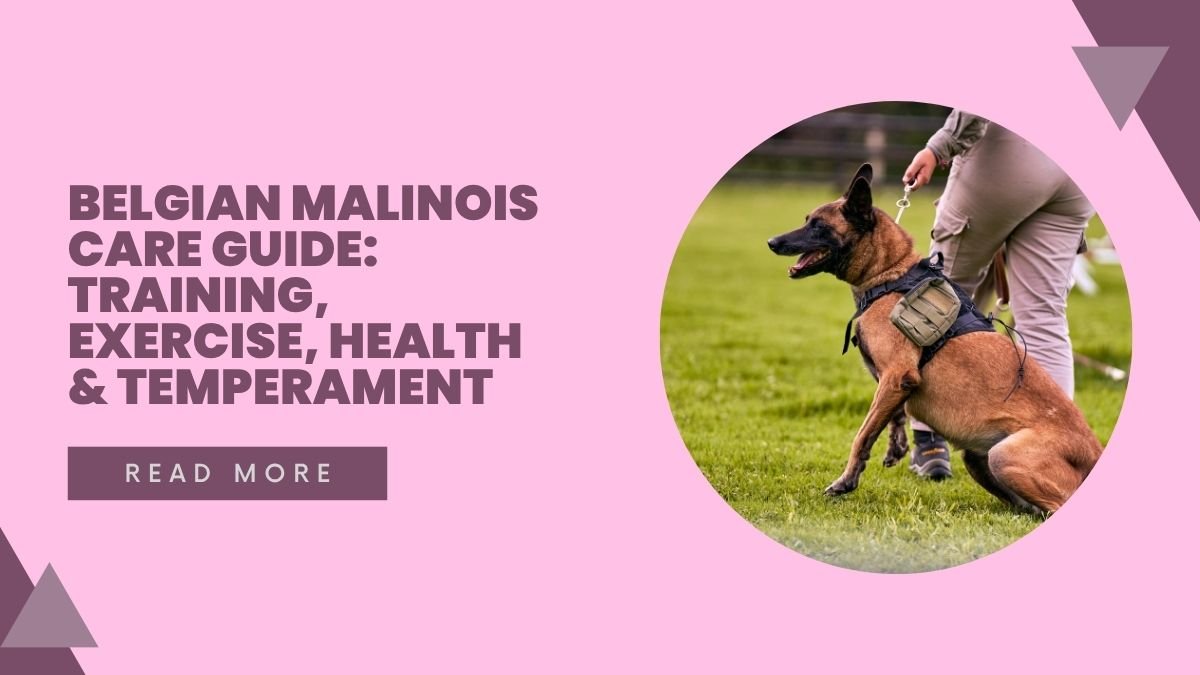
Malinois Belgians respond well to a well-structured dog training and early socialization. They are fond of learning, are good in obedience and canine sports, including agility. To avoid boredom and negative behaviors, keep them engaged.
They have high energy requirements in terms of exercises, which are critical to their health and happiness. To keep the joints healthy, they can also enjoy a balanced food with glucosamine and chondroitin added to the normal diet of active dogs, as well as high quality protein, which helps to increase their energy supplies.
Temperament
An owner who is not intimidated by the exercise, behavioral and mental requirements of a Belgian Malinois will be rewarded with the benefits of this strong working breed. With the breed becoming more popular as a pet, it is crucial to conduct proper research and accurately consider whether one can fulfill the needs of the breed before introducing it into a home.
Malinois are highly intelligent, willing to learn and are obedient, which makes them very easy to train using positive reinforcement and through consistent teaching.
Extensive early socialization with individuals, with other dogs and conditions, will help to avert the problem behaviors such as excessive barking, biting or grabbing that can be caused by fear, anxiety or boredom. By spending the power of a Malinois on work or play activities, the chance of destructive actions and prey drive issues that could be caused by lack of activity needs will be reduced as well.
Belgian Malinois being natural herders, the dogs will tend to herd pets and little children unless they are taught to suppress this instinct.
The solution will include herding of training classes, continuous obedience and agility training to ensure your dog is relaxed with pets and kids and it will also give her an outlet on which to practice her herding instinct. Malinois being a herding dog is naturally protective and will be watchdogs in their respective communities.
Just like any dog, ensure that your pet as much as possible has been taken through normal check-up requirements at the veterinary, and well as ensure that s/he is on good diet which enables proper weight usage and healthy joint movements.
To prevent overfeeding portion the food of your dog on a scaling, every day weigh on a kitchen scale, and treat it very sparingly. Monthly ear check, nail trimming and brushing of teeth should also be included in the grooming of your pet. Use this as an approximate guide and you can spend PS100- PS150 per month on the day-to-day care of your pet.
Training
Belgian Malinois can be a faithful and a guardian friend with the appropriate owner. They do well with experienced pet parents who are capable of offering structure, routine and daily physical and mental stimulation. It is a perfect match of such dogs in active families willing to engage in other activities with them such as jogging, biking and dog sports.
They are uncongenial to all, however, owing to their vitality and the sense of herding. They are also likely to respond to sounds with barking and this might be an issue in shared accommodation or in a city environment.
Due to their inborn desire to work, Malinois require proper and intensive socialization that will help them to know how to approach people calmly and politely and other animals. A lack of training and socialization results in them demonstrating a range of difficult behaviors such as excessive barking, biting and destructiveness, and a high level of herding behavior.
Reactivity is not something that is easy to get in this breed, however, it can be addressed with time and the use of systematic desensitization.
This consists of exposing the dog to the trigger in a controlled setting, and rewarding calm behavior and progressively bridging the distance over a number of sessions. This is definitely not an assignment that you should take up in a street and therefore it is advisable to hire a trainer trained to handle reactive and aggressive dogs.
Well exercising and routine are also important in keeping the drive of a Malinois and the instinct to herd in check. These involve walking daily, discipline exercises and training in obedience which develops impulse control (such as leave it) exercises.
Yastremski adds that those who keep herding dogs should know how to train their dog and make them wait and think before acting rather than responding to the situation at the time. This will assist in making the herding instinct of a Malinois a strength that can be used, as opposed to a strength that is overwhelming.
Exercise
Belgian Malinois is a hardworking dog that is focused and should have some purpose and constant activity. They need to have physical activity every day in order to dispose of their huge energy, cardiovascular physical activities and athletic training.
The only aspect of their breed, which is highly underestimated, is their exercising requirements and the owners who think that a long walk will substitute a daily exercise get reactivity and destruction at their homes. A dog that lacks an outlet to vent its driver each day will divert this to barking and aggression.
Reactive and aggressive impulsive dogs require extensive systematic desensitization such as a controlled desensitization using a fenced area, a long lead and ample rewarding calm behavior to develop self-control. This sort of work does not occur on a city pavement or in your back yard, and it needs an instructor who is aware of how to conduct the procedure, safely and successfully.
Having your Malinois in good physical condition and mentally challenged will provide them with a sense of purpose and being in control which goes back home to better behavior.
Taking your dog with you to the dog park or other outdoor settings a few times a week will help burn energy and take your dog out to meet new people, other dogs and have new sights, sounds and smells.
Our structured group obedience or protection sports classes also provide your dog with an opportunity to exercise his or her natural herding instincts in a safe and controlled environment where he or she can exercise checking his or her handler and not responding to the environment.
Training a Belgian Malinois on high value is a factor because they have a high level of drive and need a reward worth the effort used. ORIJEN offers triple-flavor jerky squares with big flavor in a small package, and are also an easy-to-feed option for high-energy dogs, such as Malinois, who might have to divide their daily food into two.
Health
Being herding dogs, Malinois are working dogs but they do their best when provided with an active and mentally challenging task. This is the reason why many end up as the police dogs or in search and rescue missions. Since this, they require a huge amount of time, and must be trained to obey human commands within a structured system.
They are as well susceptible to inheritable disorders such as hip and elbow dysplasia, hypothyroidism, seizures and eye problems. When you are thinking of adding a Belgian Malinois to your family, make sure you discuss with the breeder the hereditary risks with your new pet.
Malinois are prone to bloat (gastric dilatation and volvulus), due to their deep, narrow chests. It is a condition that develops when the stomach is rolled in on itself and the organ is blocked off by the blood. Blastocystic anhydride (without urgent treatment) kills in less time than 30 minutes.
To avoid bloat, you can feed and exercise your dog in small sessions severally throughout the day and empty stomach so as to eliminate gas. When you suspect that your dog has bloat look out the cues such as heaving or gagging and little to no eruption of gas, lying in a prayer pose and seeming annoyed or in a state of anxiety.
As most purebred dogs, Malinois dogs are likely to develop hereditary cataracts and progressive retinal atrophy which is a degenerative disease that causes blindness. Unless your dog has clear eyes, then you should consult your veterinarian immediately.
They will be able to assess your dog on cataracts and PRA and prescribe medication to retard the onset of these conditions. Your vet can also prescribe eye drops to make sure that your dog has moist and healthy eyes.
Care
The Belgian Malinois represents calm power that has endless motivation that can only be sustained through reason and obstacle. They are an excellent breed to pick when the prospective owners already keep pets and are willing to help them fill their physical and mental requirements with regular training, activities and regular interaction. These are self assured working dogs that make great guards, because they are highly protective of their families.
The socialized and well-trained Belgian Malinois is a good family dog to the entire family including the children. Nevertheless, such dogs can be pedantic with young children, and might be enticed to exhibit herding behaviors to round up toddlers and as such, should be closely monitored in their interactions.
Malinois are very keen and alert; hence they do not tend to adapt well in noisy as well as chaotic environments.
Being as many other working dogs, Belgian Malinois have a high requirement of premium quality food, which preconditions their active sporty lifestyles. Find a food with nutritious food, considerable amounts of protein and of balanced minerals, such as calcium and phosphorous. And find a food with glucosamine and chondroitin so that your joints can be taken care of.
Due to their narrow and considerably deep chests, Belgian Malinois are more susceptible to this condition than any other dog breed to developing bloat, which is also referred to as gastric dilatation and volvulus (GDV). This is a condition where the stomach becomes twisted, it fills with gas and then the spleen and sometimes the liver is blocked by this condition.
When unattended it may lead to death in 30 minutes. Watch for signs of bloat, such as retching or heaving with little or no results, restlessness, an enlarged abdomen and lying down in a prayer position.
To have a long term healthy dog, it is important that you maintain a healthy weight of your dog. Excessive feeding and obesity cause additional pressure on the joints of your dog, which may cause painful diseases, such as hip and elbow dysplasia.
To prevent excess weight, weigh their food on a kitchen gram scale, reduce the amount of treats and review with your veterinarian their condition during body checkups every month.