
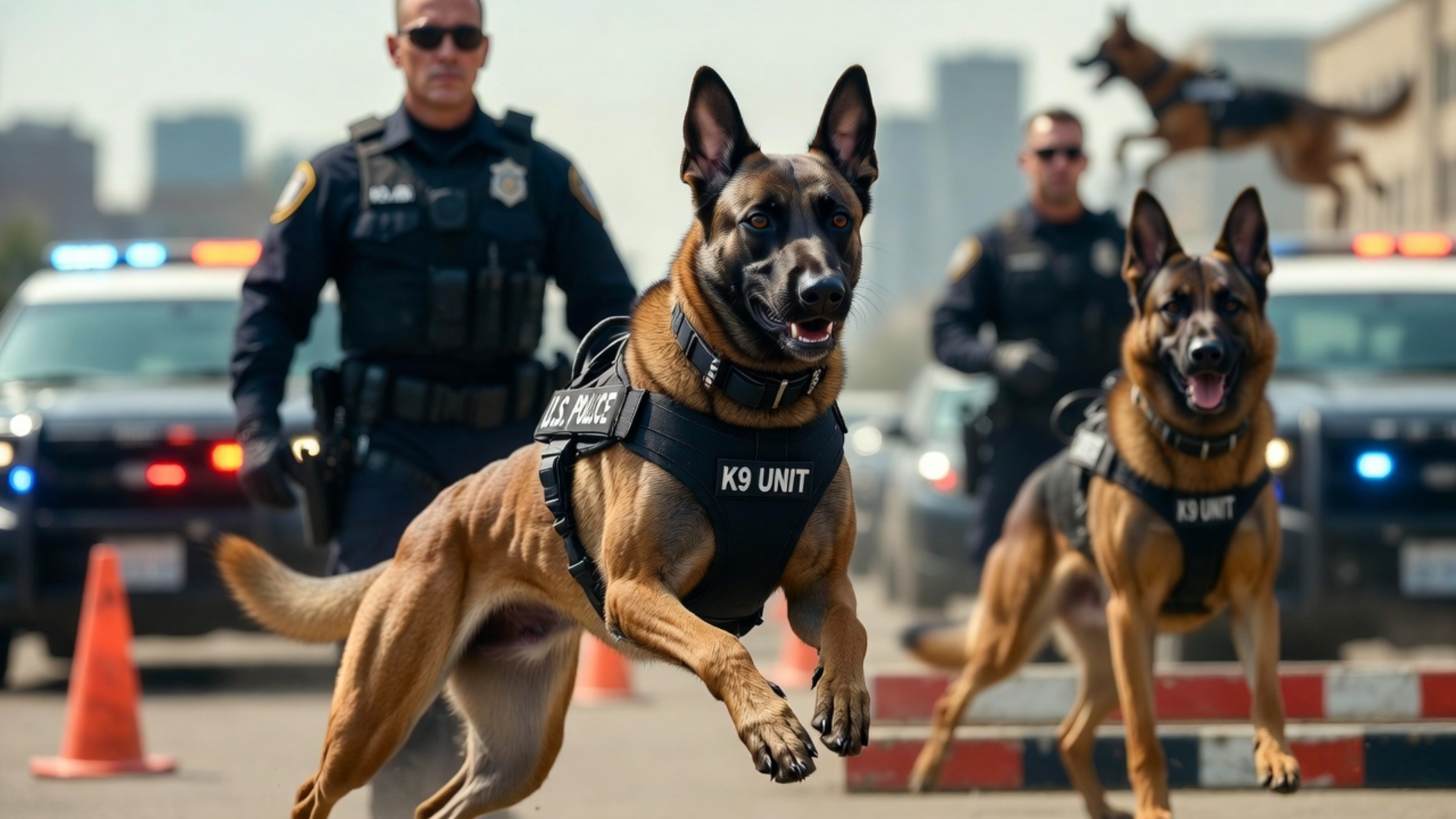
The Belgian Malinois has become the most preferred police dog breed in the United States, gradually replacing the German Shepherd in many law enforcement agencies.
Today, more than 60% of active US police K-9 units use Belgian Malinois due to their superior speed, intelligence, endurance, and reliability.
Also Read


These dogs perform critical roles such as suspect apprehension, narcotics detection, explosives detection, and search-and-rescue operations, making them essential to modern policing.
Key Reasons Police Prefer Belgian Malinois
1. Superior Speed and Agility
Belgian Malinois typically weigh 50–70 pounds, while German Shepherds weigh 60–90 pounds or more. Their lighter body allows faster acceleration, quicker direction changes, and better performance in tight urban environments. This agility is crucial during suspect chases, obstacle navigation, and tactical deployments.
2. Higher Work Drive and Trainability
Belgian Malinois have an extremely strong work drive and focus, allowing them to learn commands quickly and perform under pressure.
Police K-9 dogs complete around 480+ hours of intensive training, and Malinois often adapt faster and perform more consistently during real-world operations.
3. Better Detection and Operational Efficiency
Their powerful sense of smell allows Belgian Malinois to achieve very high detection success rates, making them ideal for drug detection, explosives identification, and tracking suspects. Their endurance allows them to work longer hours without fatigue.
4. Longer Service Life and Better Health
German Shepherds are more prone to hip dysplasia, joint issues, and back problems, which can shorten their service careers. Belgian Malinois generally have stronger joints, fewer genetic health problems, and longer working lifespans, often serving 8–10 years in active duty.
5. Tactical Versatility
Belgian Malinois are widely used in SWAT teams, border patrol, military missions, and airport security. Their ability to deploy from vehicles, helicopters, and confined spaces makes them highly versatile in high-risk situations.
Comparison: Belgian Malinois vs German Shepherd
| Feature | Belgian Malinois | German Shepherd |
|---|---|---|
| Weight | 50–70 lbs | 60–90+ lbs |
| Speed and Agility | Extremely fast and flexible | Fast but heavier |
| Training Speed | Faster learning | Slightly slower |
| Health Issues | Fewer joint problems | Higher risk of hip dysplasia |
| Service Life | 8–10 years | 6–8 years |
| Police Usage | Increasing rapidly | Declining but still used |
Training and Cost Facts
Training a police dog costs between $20,000 and $50,000, and not every dog qualifies. Belgian Malinois have a higher success rate in completing training, making them a more cost-effective and reliable choice for police departments.
The Belgian Malinois has become the top choice for US police due to its speed, intelligence, endurance, health, and versatility.
Their ability to perform demanding tasks efficiently, combined with longer service life and lower health risks, makes them superior for modern law enforcement. While German Shepherds remain valuable, Belgian Malinois are now the preferred breed for high-performance police work.
FAQs
Why are Belgian Malinois replacing German Shepherds in police work?
They offer better speed, agility, health, and work efficiency, making them more reliable for modern police operations.
How long can a Belgian Malinois serve as a police dog?
Most Belgian Malinois serve between 8 and 10 years, depending on health and performance.
Are German Shepherds still good police dogs?
Yes, German Shepherds are still excellent police dogs, but Belgian Malinois are now preferred due to their superior operational advantages.